Ten young people are learning tech on full funding, with Bluevese
October 17, 2026 · 4 min read
Ten young people. Nine months of funded training. Each one studying the area of tech they chose for themselves.
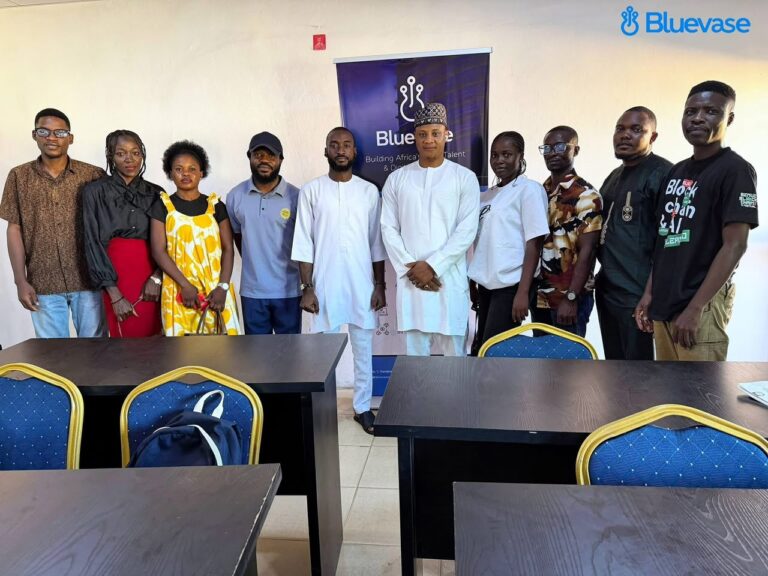
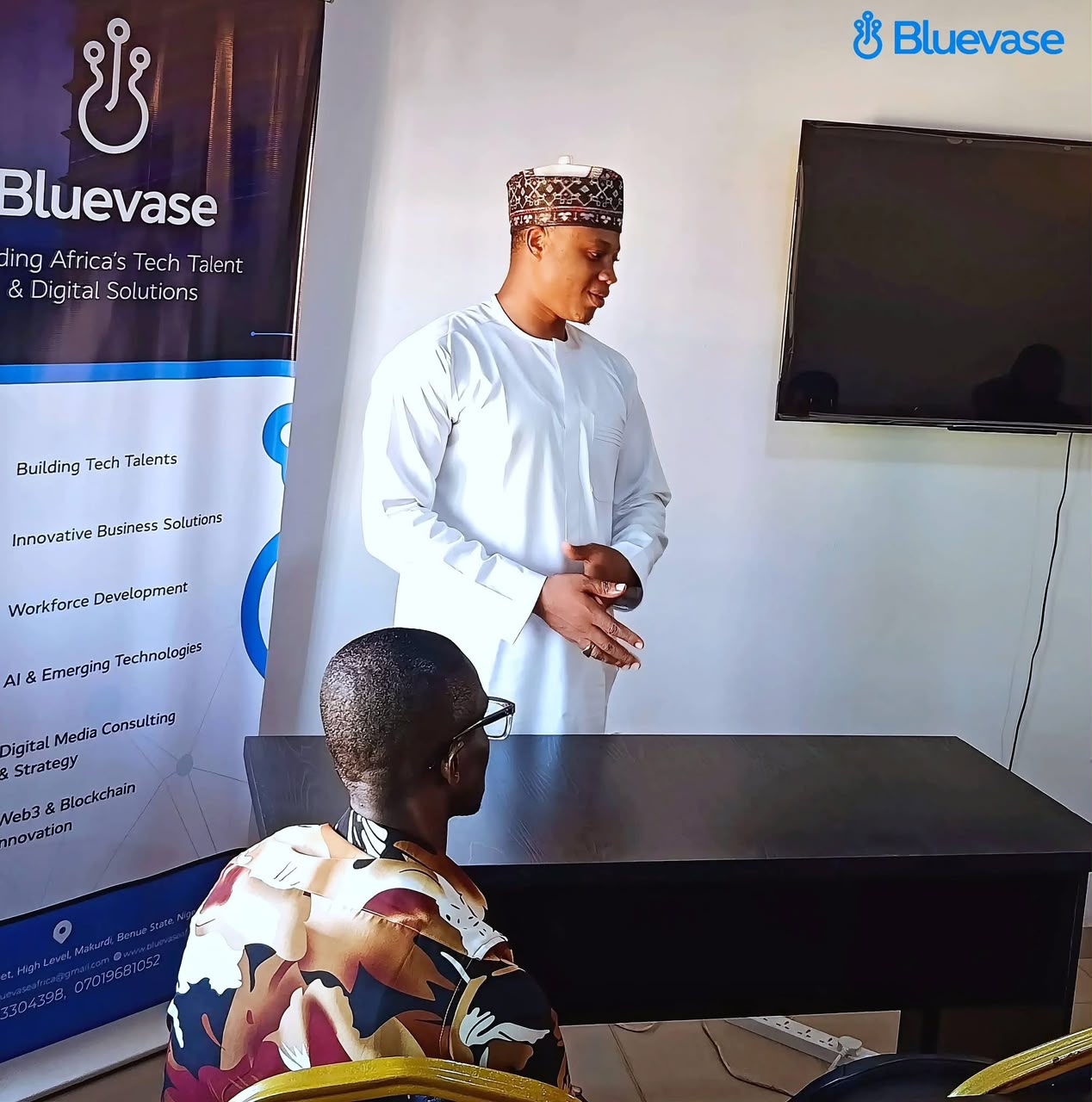
Ten young people are currently studying tech, fully funded, through a nine-month programme run by the Stephen Asom Foundation and Bluevese.
They pay nothing for training, materials or assessment. They are already in it.
What this is
Ten places. Nine months. One partner carrying the cost alongside us.
Those three numbers are the whole programme, and we would rather publish them plainly than describe an ambition.
The participants are not all learning the same thing. Each applied to Bluevese to study a particular area of tech, and each is studying the area they chose.
The part we think matters most
Funded programmes usually decide in advance what the people they are funding will learn.
There are reasons for it. One curriculum is cheaper to deliver, easier to schedule, and far easier to report on — ten people, one course, one completion figure. It is the obvious way to run a cohort.
It also quietly reverses the thing the programme is supposed to do. A young person who is handed a subject is a beneficiary. A young person who chose their subject is a person pursuing something, with the money removed as an obstacle.
Those two produce different outcomes, because motivation is not distributed evenly across subjects. Someone learning the thing they actually want to learn will keep going through the month where nothing works. Someone learning the thing that was available will not, and will leave, and will be recorded as attrition rather than as a design decision made by somebody else.
So the ten are on different tracks. It is harder to administer and harder to summarise. We think it is the reason it will work.
[OPTIONAL, and it would strengthen the article: name the areas they are studying — “three in software development, two in data, two in design” or however it breaks down. It makes the cohort real rather than abstract, and it shows a future funder the range you can support. Only if you are comfortable publishing it.]
Why nine months
The length is the other deliberate part.
Short intensive courses are cheaper per head, easier to run, and produce a graduation photograph within weeks. They also produce people who can follow a tutorial and stall the first time something breaks in a way the tutorial did not cover — which, in technical work, is most days.
The ability to get unstuck is not taught. It accumulates, from having been stuck repeatedly and having found the way out. That takes months, and there is no compressed version of it.
So we chose depth over numbers. Ten people who can work independently at the end of this are worth more to themselves, and to any employer, than fifty who have completed an introduction.
We have set out that argument at more length in Nine months, not nine weeks.
Why a partner rather than a sponsor
Bluevese is not a logo on this page.
A funder writes a cheque and receives a report. A partner shares the design of the thing — what is taught, what standard counts as finished, what happens to a participant who is struggling in month four. Those decisions determine whether a programme works, and they are better made by people who know the industry the participants are trying to enter.
Bluevese also brought the structure that makes individual tracks possible. Ten people studying ten things is only workable with an organisation set up to teach them.
This is the shape of partnership we are looking for generally: a specific number of people, a real skill, and a length of time long enough for it to hold. If your organisation can do that, we would like to hear from you.
This cohort is full
Applications for these ten places have closed. The participants applied to Bluevese and are already studying, so there is nothing to apply for here today.
We are saying that plainly because the alternative wastes the time of exactly the people we most want to reach. An open-looking page that leads nowhere costs more goodwill than an honest closed one.
[CONFIRM: whether there will be a further cohort, and how someone hears about it.
If the answer is “we hope so, funding permitting”, say that — it is a better answer than silence. If there is any way to be told when applications next open, an email address or a form, put it here. This is the single most useful line on the page for a young person reading it, and right now the page gives them nowhere to go.]
What we will publish
At the end of the nine months we will report what happened. Not a photograph and a number — how many of the ten finished, what they can do that they could not do before, and where the programme did not work as designed.
The last part is the one most organisations leave out, and it is the part that makes the rest worth reading. A report with no failures in it is a report that has been edited.
Interested in funding or hosting a cohort? Talk to us.